
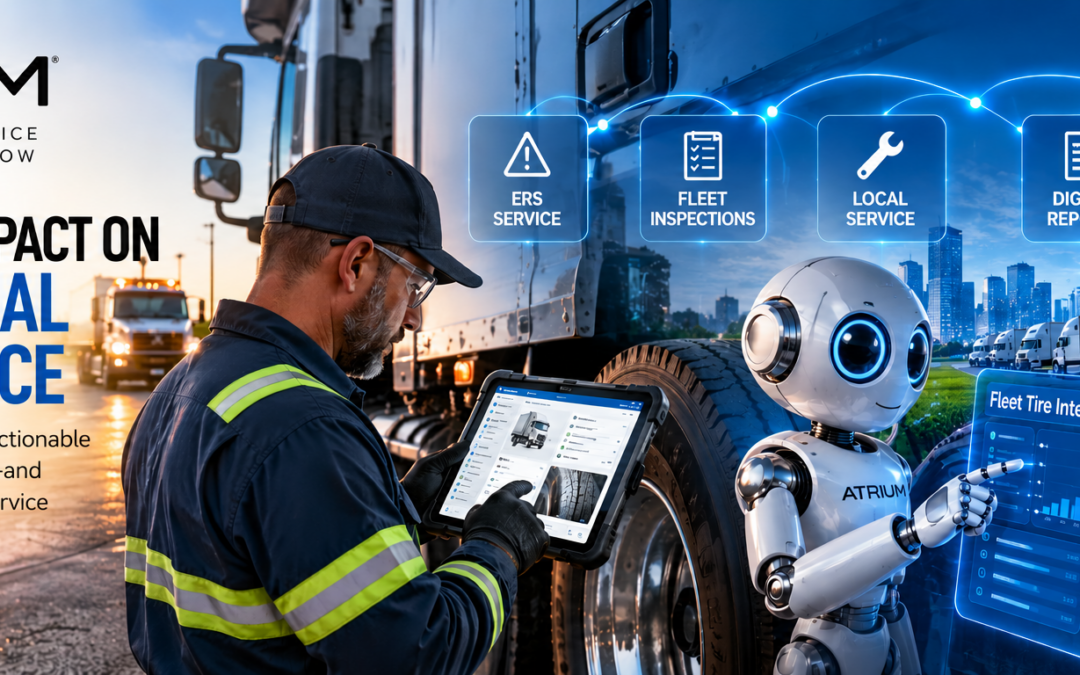
PLATFORM IMPACT ON COMMERCIAL TIRE SERVICE
How Fleet Demand, AI and Actionable Data Are Transforming Commercial Tire Service Standards
Executive Summary
For decades, commercial tire service has operated largely through a combination of phone calls, paper work orders, emails, spreadsheets and long-standing relationships between fleets and tire dealers.
Emergency road service was one of the clearest examples. A driver experiences a tire-related breakdown. A dispatcher makes a phone call. A service provider is contacted. Information is passed between multiple people. Updates are requested manually. A technician completes the service, and paperwork eventually makes its way back to the fleet.
Atrium initially set out to change that process.
For the past five years, Atrium Solutions has been developing and deploying an AI-powered Emergency Road Service platform designed specifically for the commercial tire industry. The platform digitally connects fleets, dispatchers, tire dealers and technicians throughout the service event – providing faster dispatching, real-time communications, ETA information, digital service reports, images, retorque reminders and actionable analytics.
But something unexpected is now happening.
The technology that started with emergency road service is moving beyond ERS.
Tire dealers are beginning to use the same platform during everyday service operations. Technicians can digitally document fleet inspections, local service work and other tire-related activity from the field.
The processes, reporting, images, data capture and analytics originally developed around an emergency event can now follow the tire throughout everyday service. Instead of digitizing only the breakdown, dealers can begin digitizing the service relationship itself.
For fleets, this creates a growing source of actionable tire intelligence. For dealers, it creates an opportunity to move away from paper, standardize service processes, improve documentation and provide customers with a level of transparency and intelligence that was historically difficult to achieve.
ERS was the starting point. The larger transformation is commercial tire service.
Five Years of Building Before the Tipping Point
Disruptive technologies rarely become mainstream immediately. For Atrium, the first five years involved developing the platform, improving workflows, integrating dealers, supporting fleets and demonstrating that an AI-powered service model could operate successfully in the real world.
The technology was producing measurable operational improvements: faster dispatching, real-time communications, ETA information, technician-on-site updates, roll-time notifications, digital service reports, images, retorque reminders and advanced analytics.
One platform. One process. Complete transparency. Actionable intelligence.
Yet having the technology and having the market understand the technology are two very different things. For years, that gap slowed adoption.
What Changed?
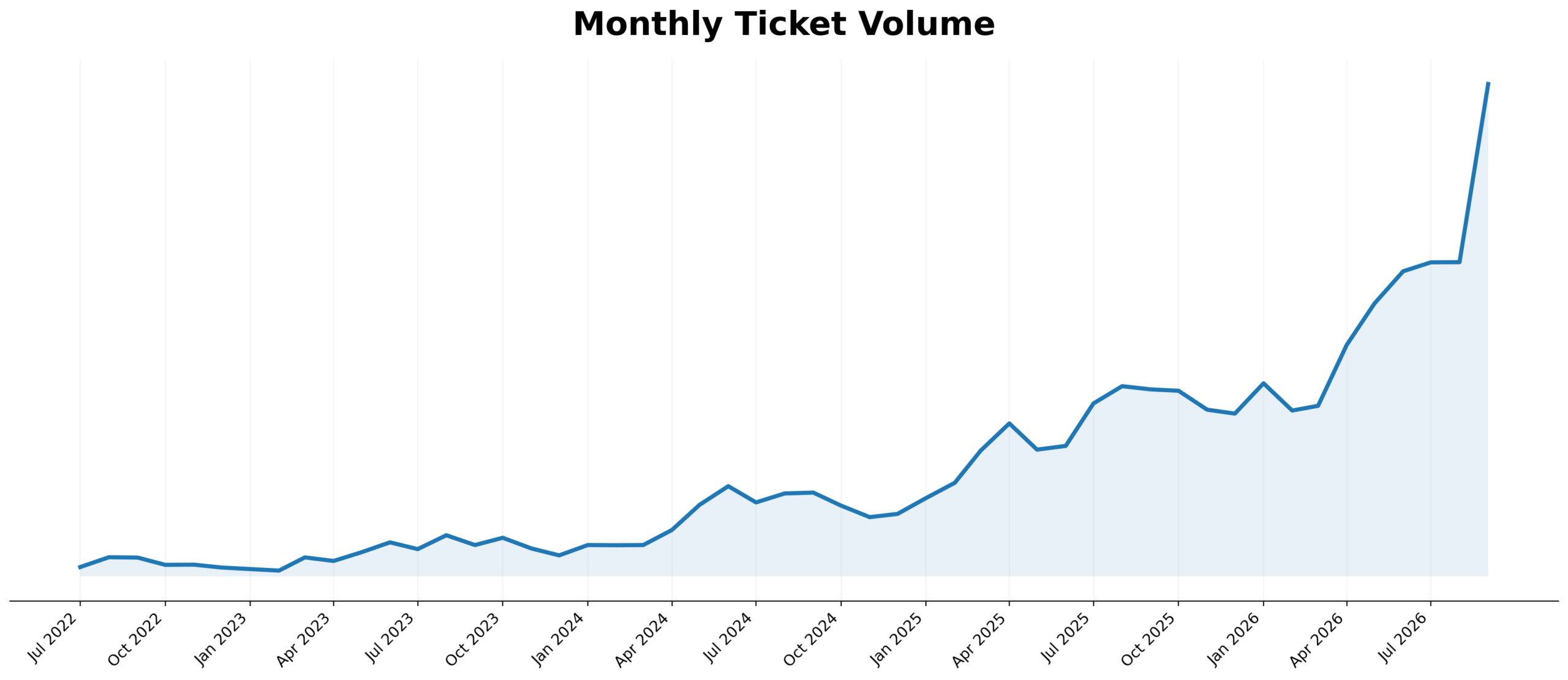
In September 2026, awareness of AI-powered service technology expanded dramatically across the commercial tire industry as one of the top tire manufacturers exited their traditional model. Fleets began evaluating what was now possible. Dealers began receiving questions from customers. Organizations that had previously relied on traditional processes started examining digital alternatives.
The immediate reaction was not necessarily instant adoption. Some fleets paused. Some dealers waited. Organizations reviewed their options. Others initially believed that changing an established process would introduce delays or complexity.
But increased awareness gave the market a reason to compare the traditional service model with what technology could now deliver.
The conversation began shifting from ‘Why aren’t we receiving these capabilities today?’
The First 30 Days: From Awareness to Demand
The first 30 days of broader industry awareness have provided an early indication of how quickly expectations can change. Fleets that initially anticipated delays or disruption began reviewing the capabilities available to them.
They saw that emergency service could be dispatched rapidly without a series of manual phone calls; that multiple stakeholders could automatically receive updates; that ETA, technician arrival and roll time could become visible; and that service documentation, images and service information could become digital records instead of fragmented pieces of information.
Increasingly, fleets also began recognizing that every service event could produce something even more valuable: data.
Rather than treating a breakdown as an isolated event that ends when the truck returns to service, fleets can begin identifying recurring maintenance issues, operating conditions, potential warranty opportunities and patterns across their equipment.
From an ERS Platform to an Everyday Service Platform
Atrium’s original problem was emergency road service. It was an obvious place to begin because ERS exposed many of the inefficiencies of the traditional service model: multiple phone calls, limited visibility, inconsistent documentation, disconnected stakeholders and valuable service information that was difficult to capture and analyze.
The same technology has value whether the truck is disabled on the side of a highway or sitting in a fleet yard.
A technician performing a scheduled fleet inspection or local service can log into the platform and digitally document the work being completed. Images can be captured. Tire condition and service information can be recorded. A digital service report can be created. The information becomes structured data rather than another piece of paper.
Once that information is digital, the same data and analytics capabilities developed for ERS can be applied. The platform therefore begins to connect two areas that have traditionally been treated separately: emergency service and everyday tire service.
For the fleet, both are ultimately telling the same story about its tires, equipment and operating environment.
The Real Opportunity Is the Data
This evolution changes the value proposition significantly. An ERS event might tell a fleet why one tire was removed during a roadside breakdown. Combining that information with tire conditions identified during inspections, scheduled maintenance, yard work and routine service creates a much larger picture.
Repeated irregular wear may point toward a maintenance opportunity. Similar tire damage across multiple units may identify an operating issue. Images and removal information may reveal potential warranty opportunities. Service history may show recurring problems associated with particular equipment, positions or operating conditions.
What was previously buried in paper service records – or known only through the experience of individual technicians – can begin to become measurable.
Every service event becomes an opportunity to learn something.
From Paperwork to Intelligence
Commercial tire technicians have always generated valuable information. They see the tire. They see the vehicle. They understand what failed. They identify wear patterns. They notice maintenance conditions. They often recognize issues long before those issues appear in a fleet’s financial or maintenance reporting.
Historically, much of that intelligence has been captured on paper, entered into notes or communicated verbally. That limits what can be done with it.
When service information and images are captured digitally at the point of service, the information can become part of a larger dataset.
Paper documents what happened. Structured digital data can help explain why it is happening.
For the dealer, going paperless can improve documentation, consistency, accessibility and efficiency. For the fleet, the same process creates greater visibility and a growing body of information that can be analyzed for actionable opportunities.
The digital service report becomes more than a replacement for paper. It becomes the foundation for intelligence.
One Platform Across the Service Relationship
The future opportunity is not simply to create a better emergency road service process. It is to create a consistent digital process across the dealer’s relationship with the fleet.
A roadside breakdown. A fleet inspection. Scheduled tire maintenance. Local service work. A tire removal. A potential warranty condition. Each event can contribute to the same digital history.
This gives dealers the ability to provide fleets with something beyond excellent physical service: consistent, structured and actionable information about their tire program.
One platform. One process. One growing source of fleet tire intelligence.
Fleet Demand Is Beginning to Pull Dealers Forward
Historically, commercial tire relationships have been built on service, trust, geographic coverage and personal relationships. Those factors remain extremely important. But fleets are increasingly adding another requirement: technology capability.
Some fleets are now approaching their existing service providers and asking them to participate in the digital service process. For dealers that have embraced the technology, this creates an opportunity to strengthen existing relationships, differentiate their service offering and compete for additional fleet business.
For dealers that remain unengaged, the implications can be different. A dealer may have spent years building a strong fleet relationship based on excellent service. But when that fleet begins requiring digital processes, real-time visibility, standardized reporting and actionable data, these relationship are being bypassed if the dealer cannot provide those capabilities.
Technology is becoming part of the definition of service – not separate from it.
Years of Adoption Are Being Compressed Into Weeks
Historically, implementing new technology across a commercial tire dealership could take months or even years. Processes had to change. Employees needed to be convinced. Locations had to participate. Technology adoption competed against the reality of operating a busy service business every day.
Fleet demand is changing that equation. Dealers that recognize an opportunity to protect existing business or capture new fleet revenue have a much stronger incentive to move quickly.
Stores are being onboarded. Teams are being trained. Service processes are being standardized. Organizations that previously resisted technology are discovering that the operational change required can be far smaller than they expected.
Technology does not have to replace the people or service relationships that made a dealer successful. It can make those relationships more valuable.
Technology Is Changing the Dealer’s Value Proposition
Traditionally, fleets evaluated tire dealers on factors such as service quality, relationships, geographic coverage, product availability, technician capability and response time. Those factors remain critical.
But dealers now have an opportunity to add another dimension: What does the fleet learn from all the work the dealer performs?
A dealer completing hundreds or thousands of service events for a customer is generating enormous amounts of potentially useful information. When that information remains on paper, much of its strategic value disappears. When it becomes structured digital data, the dealer can help the fleet identify maintenance opportunities, operating issues, recurring tire conditions and potential warranty opportunities.
That changes the dealer’s role from simply ‘the company that services our tires’ toward ‘the company that helps us understand our tire operation.’
The disruption is therefore not technology versus tire dealers. It is increasingly a distinction between technology-enabled tire dealers and dealers relying exclusively on traditional processes.
The Network Effect Becomes Much Larger
As fleets see more value in the information, they have more reason to ask their service providers to use the platform. As dealers receive more fleet demand, they have more reason to onboard technicians and locations. As technicians use the platform for more than ERS, more service activity becomes digital. And as more service activity becomes digital, the data becomes increasingly useful.
Adoption creates data. Data creates value. Value drives further adoption.
Relationships Still Matter – But the Definition of Service Is Changing
The commercial tire industry will remain a relationship business. Technology will not replace the technician arriving on the side of the highway or working in a fleet yard. It will not replace a dealer that answers the call in difficult conditions. And it will not replace the trust that takes years to build between a fleet and its service providers.
What technology can change is everything surrounding that service. It can determine how quickly the right provider is identified. It can keep everyone informed. It can document what happened. It can provide transparency. It can identify recurring problems. And it can turn thousands of individual service events into information capable of helping a fleet make better decisions.
Technology is becoming one of the ways a dealer delivers a better relationship. This is the Platform Impact On Commercial Tire Service.
The Tipping Point May Be the Beginning of Something Bigger
Thirty days does not define an industry transformation. But it can reveal when one has started.
Emergency road service was an ideal starting point. It is urgent. It involves multiple stakeholders. Communication matters. Response time matters. Documentation matters. And downtime has an immediate cost.
But the technology required to improve ERS does not need to stop when the truck leaves the roadside. The same digital infrastructure can follow the dealer and fleet into everyday service.
A technician conducting an inspection can create a digital record. A local service call can generate structured information. A tire removal can contribute images and condition data. A potential maintenance or warranty issue can become visible. Over time, thousands of individual interactions can become a source of actionable intelligence.
The industry is moving from documenting service to learning from service.
The tire dealer remains at the centre of that relationship. The technician remains the person physically inspecting, repairing and replacing the tire. The fleet remains focused on uptime, safety and operating cost. Technology connects them.
Atrium began by asking how technology could improve emergency road service. Five years later, the more important question may be:
What happens when every tire service event becomes digital, connected and intelligent?
ERS opened the door.
Everyday service is creating the data.
Actionable intelligence is changing the relationship.
ATRIUM SOLUTIONS INC.
AI-Powered Commercial Tire Service Technology
Smarter Service. Complete Visibility. Actionable Intelligence.
www.atrium.app | aisolutions@atrium.app